The client is a Singapore-based international K–12 education network operating schools across multiple countries and curricula. Its operations span academic quality management, educational development, and day-to-day school administration.
As the organization expanded internationally, it needed to standardize administrative processes, strengthen coordination between departments, and improve access to operational information. Smart Learn AI was developed to support these needs through a more connected and flexible digital operations environment.
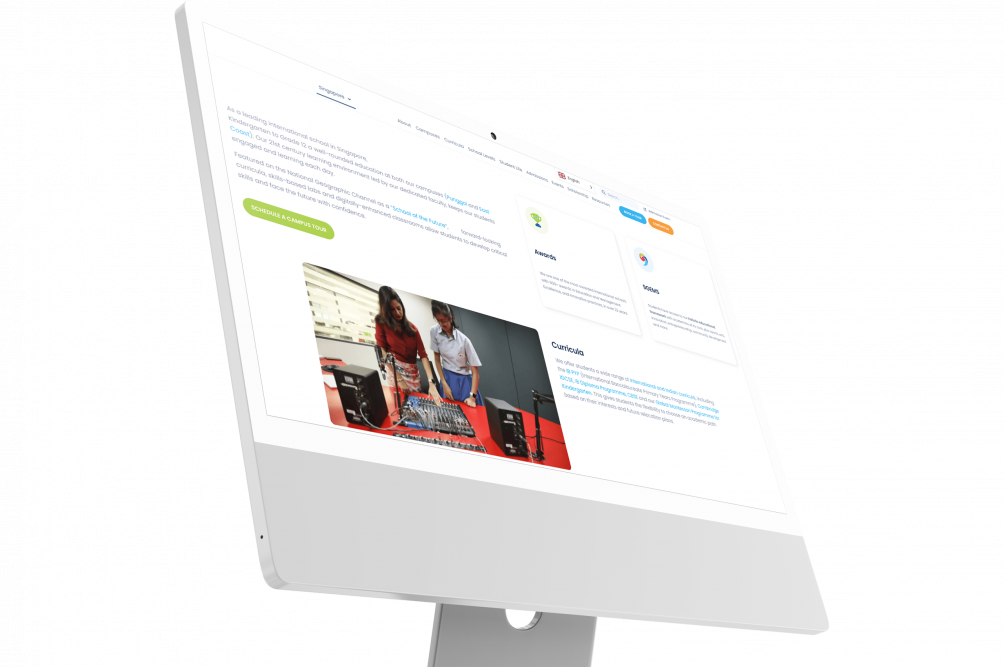
The client's departments relied on manual workflows, fragmented information, and disconnected applications. These limitations slowed task execution, complicated management reporting, and reduced visibility across operational activities.
The organization needed a unified yet flexible platform that could accommodate different departmental requirements without forcing every team into the same workflow. Key challenges included:
- Manual and repetitive processes: Administrative activities required significant manual effort, limiting operational efficiency.
- Fragmented operational information: Disconnected applications made it harder to access relevant information and coordinate activities across departments.
- Limited management visibility: Inconsistent access to operational data complicated performance monitoring and decision-making.
- Department-specific requirements: GCEE and Operations needed dedicated functionality aligned with their distinct responsibilities.
- Access control: The platform needed to provide permissions appropriate to users' roles and organizational responsibilities.
- Integration with existing systems: New digital workflows had to work alongside established internal applications.
- Future scalability: The organization required an architecture that could accommodate additional departments and functionality without redesigning the entire platform.

SotaTek developed Smart Learn AI to help the education network:
- Digitize administrative workflows across GCEE and Operations.
- Reduce repetitive manual tasks and improve consistency in daily operations.
- Provide management dashboards for monitoring operational activities and performance indicators.
- Establish role-based access control aligned with organizational responsibilities.
- Integrate with existing internal systems to improve information accessibility.
- Enable departmental modules to operate independently within a broader platform.
- Support future expansion through a modular, microservices-based architecture.
- Maintain alignment between business requirements, user experience, and implementation through iterative stakeholder collaboration.


SotaTek developed Smart Learn AI as a modular, microservices-based platform to digitize workflows across GCEE and Operations. The solution combines department-specific applications, automated processes, role-based access control, and management dashboards within a connected operational environment.
Integration with existing internal systems helps improve information accessibility, while independently deployable modules provide flexibility for future development. This approach allows the education network to address distinct departmental requirements while maintaining a foundation for broader organizational growth.
The project demonstrates SotaTek's capabilities in Custom Software Development, enterprise application engineering, and system integration.
Key Solution Components
1. GCEE and Operations Management Modules
Developed dedicated modules for the Global Center for Educational Excellence (GCEE) and Operations teams. Each module addresses its department's administrative requirements and supports more structured digital workflows.
This department-oriented approach enables teams to use functionality relevant to their responsibilities within the wider Smart Learn AI platform.
2. Workflow Digitization and Automation
Replaced selected manual and repetitive processes with digital workflows. By structuring everyday administrative activities within the platform, the solution helps reduce manual effort, improve task consistency, and support more efficient execution.
3. Real-Time Management Dashboards
Implemented management dashboards that provide updated operational information and relevant performance indicators. These dashboards improve visibility into departmental activities, helping managers monitor operations and make more informed decisions.
4. Modular and Independent Applications
Built department-specific modules using a microservices-based approach. Modules can function as standalone applications or as part of the broader platform, providing flexibility to introduce additional departmental functionality as organizational requirements evolve.
This architecture supports incremental expansion without requiring a complete platform redesign whenever new needs arise.
5. Role-Based Access Control
Implemented customized access permissions aligned with the client's organizational structure. Role-based access control (RBAC) helps ensure users can access the functions and information appropriate to their assigned responsibilities.
This supports more structured access management across departments and operational functions.
6. Existing System Integration
Connected Smart Learn AI with existing internal systems to support information exchange and reduce reliance on disconnected tools. This integration helps improve data accessibility and coordination while minimizing disruption to established operational processes.
Technology and Implementation
SotaTek developed Smart Learn AI using a modular software architecture designed to support multiple departments, evolving business requirements, and integration with existing systems.
- Reported technology stack: Angular, .NET, TypeScript, PostgreSQL, AWS, and Single Sign-On (SSO).
- Architecture: Microservices-based architecture with independently operating departmental modules.
- Core implementation: Workflow digitization, management dashboards, role-based access control, and internal system integration.
- Delivery approach: Agile development with bi-weekly sprints, stakeholder reviews, demonstrations, and iterative improvements.
- Requirements alignment: Collaborative review of UI/UX designs and user stories with the client's leadership before development.
- Quality and feedback: Continuous stakeholder feedback and demonstrations throughout implementation to validate functionality and respond to changing requirements.
Operational Workflow
Smart Learn AI connects departmental activities with shared operational visibility through the following workflow:
- Role-based access: Users access the functions and information permitted by their assigned roles.
- Departmental workflow execution: GCEE and Operations teams carry out administrative activities through their dedicated digital modules.
- System connectivity: The platform exchanges supported operational information with existing internal applications.
- Performance monitoring: Management dashboards present relevant operational information and departmental performance indicators.
- Modular expansion: Additional departmental functionality can be introduced through separate modules as organizational needs evolve.
Related Industry Insights
Modernizing education operations requires more than digitizing individual tasks. Education networks also need connected systems, standardized processes, and flexible platforms that can accommodate different departmental requirements.
Explore the Smart Learn AI — Education Operations Transformation Whitepaper for additional context on the project's approach to education operations transformation.
Smart Learn AI delivered capabilities designed to improve operational efficiency, management visibility, and the education network's ability to expand its digital operations.
Operational Efficiency
- Reduced administrative workload: Digitized repetitive processes, helping staff spend less time on manual administrative activities.
- More efficient task execution: Streamlined departmental workflows to support day-to-day operations.
- Improved process consistency: Reduced reliance on manual processing and supported more consistent administrative activities.
Management and Decision-Making
- Enhanced operational visibility: Provided managers with dashboards for monitoring activities and reviewing relevant performance information.
- More informed decision-making: Improved access to operational data to support management decisions.
- Better cross-departmental coordination: Connected previously fragmented workflows and information sources to support more consistent collaboration.
Scalability and Organizational Growth
- Flexible departmental expansion: Enabled additional departments and functionality to be incorporated through modular application components.
- Reduced dependence on a monolithic platform structure: Independent modules provide flexibility for further development without requiring a complete platform redesign.
Project Delivery and Stakeholder Alignment
- Iterative requirements validation: Bi-weekly reviews, regular demonstrations, and continuous feedback helped the development team respond to evolving requirements and maintain transparency throughout delivery.
These outcomes reflect the capabilities and delivery approach described in the project information. No quantified improvements in administrative hours, cost savings, or task completion time were provided.
Modernize Education Operations with SotaTek
Managing a growing education network requires connected workflows, accessible operational information, and digital platforms that can evolve alongside institutional needs.
SotaTek helps schools and education organizations modernize their operations through custom software development, enterprise system integration, workflow automation, and scalable application engineering.
Contact us to discuss your next EdTech or education digital transformation project.