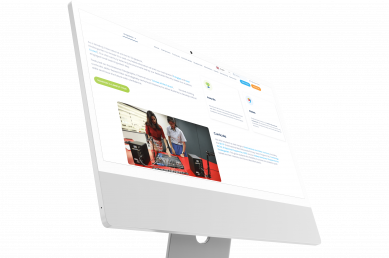
The client is a Japanese medical group operating nearly 30 clinics across Kansai and other regions, including Fukuoka. Its services span multiple specialties, including internal medicine, orthopedics, otolaryngology, ophthalmology, and gastroenterology.
Managing a network of high-volume, multi-specialty clinics created a need for standardized clinical documentation, more efficient administrative processes, and greater operational consistency across facilities. The group adopted ChartX to support clinical documentation and integrate AI-assisted capabilities into its existing healthcare workflows.
Explore the ChartX AI-powered clinical documentation platform to learn more about the product.

Physicians reportedly spent 30–40% of their working time on documentation, including SOAP notes and manual data entry into electronic health records. This administrative burden extended beyond consultation hours, contributing to overtime and physician fatigue.
The client needed a solution that could reduce repetitive documentation tasks without compromising clinical review or disrupting established workflows. Key challenges included:
- Documentation workload: Reduce the time physicians spent transcribing consultations and preparing clinical records.
- Clinical accuracy and consistency: Organize consultation information into structured, specialty-appropriate documentation while allowing clinicians to verify the generated content.
- Medical terminology: Support specialized terminology, clinical abbreviations, and data fields used across different medical specialties.
- Workflow integration: Incorporate AI-generated documentation into existing EHR/EMR processes.
- Operational scalability: Support deployment across a multi-clinic healthcare group with different specialties and documentation requirements.
- Responsible use of AI: Ensure that generated clinical content can be reviewed, corrected, and approved by healthcare professionals before records are finalized.

SotaTek developed ChartX to help the healthcare group:
- Automate transcription of doctor-patient conversations.
- Generate structured clinical notes, including SOAP notes and other supported document formats.
- Extract and summarize relevant clinical information from consultations.
- Support specialty-specific templates and medical terminology.
- Integrate clinical documentation into established EHR/EMR workflows.
- Reduce repetitive administrative work and improve documentation efficiency.
- Maintain physician review and approval of AI-generated records.
- Support ongoing product improvement and deployment across multiple clinics.


SotaTek developed ChartX to automate clinical documentation from consultation capture to medical record completion. The platform uses AI-assisted speech recognition, clinical information processing, and structured note generation to transform doctor-patient conversations into reviewable medical records.
Customizable templates support documentation requirements across medical specialties, while EHR/EMR integration helps incorporate the resulting records into existing clinical workflows. The solution combines capabilities associated with AI & Machine Learning Development and Custom Software Development to address the practical requirements of healthcare documentation.
Key Solution Components
1. Real-Time AI Medical Transcription
ChartX captures supported doctor-patient conversations during consultations and converts spoken dialogue into text. AI-assisted transcription is designed to handle medical terminology, clinical abbreviations, and contextual information, reducing the manual effort involved in documenting patient encounters.
2. Automated Clinical Note Generation
The platform transforms consultation content into structured clinical documentation, including SOAP notes and other supported formats such as DAP notes and discharge summaries. Relevant information is organized into standardized sections so physicians can review and finalize records more efficiently.
3. Specialty-Specific Templates and Medical Terminology
ChartX supports configurable documentation formats tailored to different medical specialties. The solution also accommodates specialized terminology and clinical data fields, including Range of Motion (ROM) and Manual Muscle Testing (MMT), helping clinicians retain relevant information within their documentation workflows.
4. AI-Powered Clinical Summarization
The platform identifies and summarizes important information from patient consultations. This helps physicians review lengthy conversations and prepare clinical records, reports, and referral documents without manually extracting every relevant detail.
5. EHR/EMR Integration
ChartX supports integration with existing electronic health record and electronic medical record systems to streamline the transfer of clinical documentation into established healthcare workflows. SotaTek's project materials identify Hayabusa EMR among the systems used in the clinic deployment. The specific technical integration method has not been disclosed.
6. Physician Review and Approval
AI-generated documentation is presented for clinical review, allowing physicians to check, correct, and approve information before finalizing records. This review step keeps healthcare professionals responsible for validating the accuracy and completeness of clinical documentation.
Technology and Implementation
ChartX combines AI-assisted speech recognition, clinical text processing, document generation, and healthcare system integration to support digital documentation workflows. The implementation is designed to reduce repetitive administrative work while accommodating different clinical specialties.
- Core capabilities: AI speech recognition, clinical text processing, AI-assisted summarization, and structured document generation.
- Healthcare integration: EHR/EMR connectivity, including Hayabusa EMR as reported in SotaTek's project materials.
- Customization: Specialty-specific documentation formats, medical terminology configuration, and structured clinical data fields.
- AI processing optimization: ChartX's September 2026 release notes confirm the implementation of Claude Prompt Caching to improve processing efficiency.
- Ongoing improvement: An October 2026 update addressed the risk of incorrect or irrelevant content in AI-generated summaries.
- Data protection considerations: The solution processes sensitive clinical information, making healthcare data protection an important implementation consideration.
The supplied project information does not specify a complete technology stack or detailed integration architecture.
Clinical Documentation Workflow
ChartX supports a documentation workflow comprising five stages:
- Consultation capture: Supported doctor-patient conversations are captured and converted into text through AI transcription.
- Clinical information processing: AI-assisted processing identifies relevant symptoms, findings, assessments, and other consultation information.
- Structured documentation: Extracted information is organized into SOAP notes or other supported clinical documentation formats.
- Physician verification: Clinicians review, edit, and approve generated content to confirm its clinical accuracy and completeness.
- Medical record integration: Finalized documentation is incorporated into the clinic's existing EHR/EMR workflow through supported integration mechanisms.
Related Industry Insights
AI-assisted clinical documentation is one application of AI in healthcare, helping healthcare organizations address repetitive administrative tasks while supporting existing clinical workflows. Read AI in Healthcare: Use Cases, Benefits & Solutions to explore AI applications in healthcare, and AI Automation vs RPA: Key Differences, Use Cases, and How to Choose to understand the differences between AI-driven automation and rule-based process automation.
SotaTek's project materials report operational, patient experience, and deployment outcomes associated with ChartX.
Operational Efficiency
- 5–10+ hours saved weekly: Physicians reportedly reduced their weekly documentation workload, creating more time for patient care and reducing the need for administrative work after consultations.
- Over 30% fewer documentation errors: SotaTek reported a reduction in documentation errors, supporting more consistent clinical records and administrative processes.
Patient Experience
- 89% patient satisfaction: SotaTek's project materials report that 89% of patients expressed higher satisfaction with the consultation experience following ChartX implementation.
Deployment and Adoption
- 15 clinics operational: In the reported 2025 deployment snapshot, 15 clinics had implemented ChartX in their daily workflows.
- 6 additional clinics in implementation: A further six clinics were undergoing deployment during 2025, indicating continued expansion across the healthcare group.
These figures reflect the results reported in the supplied project materials. The available information does not specify the measurement methodology or comparison baselines for the reported efficiency, error-reduction, and satisfaction metrics.
Build Smarter Healthcare Workflows with SotaTek
From AI-powered clinical documentation to healthcare software integration, SotaTek helps healthcare organizations develop digital solutions that streamline workflows and make complex information easier to manage.
Contact us to discuss your next healthcare AI development project.